O Que É Squirt? Entenda Como Funciona A ‘ejaculação Feminina’
Entenda o que é squirt, conhecido como ejaculação feminina, e descubra dicas para a saúde íntima, prazer e bem-estar sexual. Aprenda mais e confie já!
Mar 09, 2025
Many people have heard of squirtingduring sex but are unsure what it really means. For some, it’s a mysterious phenomenon – they wonder if it’s even real or just a myth. In truth, squirting is a documented occurrence, and researchers have found plenty of evidence that it exists. At the same time, it remains one of the least understood and most debated aspects of female sexuality, which only adds to the curiosity around it.
What Is Squirting?
Squirting refers to the release of a noticeable amount of fluid from a woman’s urethra (the tube that carries urine out of the bladder) during sexual arousal or orgasm. It’s often described as a kind of “female ejaculation”or “gushing". This means that as some women approach orgasm, they may expel a gush of liquid. Because of its unexpected nature and varying experiences from person to person, squirting has become a topic of both fascination and confusion. People commonly ask: What is this fluid? Is it just urine, or something else? Can every woman squirt, or just a few?These questions show why squirting remains a topic of scientific curiosity and debate.
The Scientific Perspective
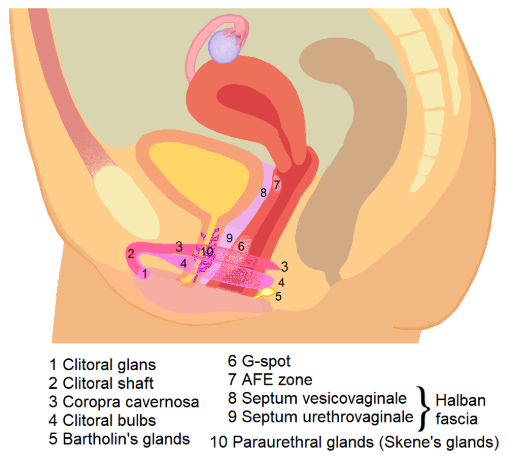
Diagram of female internal anatomy highlighting the G-spot (6) and paraurethral Skene’s glands (10), which are often linked to squirting.Scientific research has begun to shed light on what happens in the body during squirting. Studies indicate that the fluid involved in squirting comes primarily from the bladder (where urine is stored), with possible contributions from the Skene’s glands – small glands near the urethra sometimes called the female prostate.
Researchers also point out that squirting is not exactly the same as the smaller release sometimes called female ejaculation. In scientific terms, female ejaculationusually refers to a small amount (a few milliliters) of milky-white fluid that comes directly from the Skene’s glands, whereas squirtingrefers to a larger gush of clear fluid mainly from the bladder. For example, one detailed study used ultrasounds to observe women who squirt. It found that the bladder fills up during sexual stimulation and then empties when squirting occurs.
Chemical analysis of the released fluid showed it was very similar to urine, containing typical urine components, butit also had traces of a substance produced by the Skene’s glands. In simple terms, this means squirting is essentially an involuntary release of diluted urine with a bit of fluid from the female prostate mixed in. Both can happen together, but squirting tends to produce a much greater volume of liquid. This distinction helps explain why the nature of squirting fluid was debated for so long – it has components of urine, yet it isn’t exactly the same as normal urination. Scientists continue to study this phenomenon, but they agree that squirting is a real physiological response some women experience.
Common Myths and Misconceptions
Squirting’s mystique has given rise to many myths. It’s important to set the record straight with what current evidence shows:
- Myth:“Squirting is just pee.”Fact:The fluid expelled during squirting is not just urine. While tests confirm it does contain urine, they also show it includes fluid from the Skene’s glands (female prostate).
- Myth:“Everyone with a vulva can squirt (or should be able to).”Fact:Not everyone can or will squirt, and that’s perfectly normal. Bodies vary from person to person. Some data suggest roughly 40% of adult women have experienced squirting at least once.
- Myth:“Squirting isn’t real – it’s fake or just something in videos.”Fact:Squirting is real. Medical studies and numerous personal accounts have confirmed that some women do release fluid in this way.
How Does Squirting Happen? The Biological Process
Squirting is a natural bodily response that happens in some women during sexual stimulation or orgasm. It involves the release of fluid from the urethra, which is often confused with urine. However, scientific studies have confirmed that this fluid is a mix of diluted urine and secretions from the Skene’s glands, also known as the female prostate. While not all women experience squirting, it is a real physiological process that is triggered by specific nerve stimulation and muscle contractions.
The Role of Nerves and Arousal
During sexual stimulation, the nerves in the genital area send signals to the brain, increasing arousal and blood flow to the pelvic region. The G-spot, which is located on the front wall of the vagina, is a key area involved in squirting. This region is part of the urethral sponge, a soft, sponge-like tissue that surrounds the urethra and becomes engorged with bloodwhen arousal increases.
The pelvic nervesthat connect the G-spot to the brain play an essential role in the squirting process. When stimulated, they create a strong sensation of pleasure, and in some cases, this leads to an involuntary release of fluidfrom the urethra. Some women describe a feeling of “pressure” in the bladder region before the fluid is expelled.
The G-Spot and the Urethral Sponge
The G-spotis not a separate organ but rather an area rich in nerve endings and erectile tissuewithin the urethral sponge. The urethral sponge surrounds the urethra and contains tiny glands called the Skene’s glands, which are responsible for producing some of the fluid released during squirting.
When the G-spot is stimulated, it activates the Skene’s glands and the surrounding tissues, leading to an increase in secretions. These secretions mix with fluid that has accumulated in the bladder, and when stimulation continues, the muscles in the pelvic floor contract, pushing the fluid out through the urethra.
Muscle Contractions and Fluid Release
Squirting happens when pelvic floor muscles contractstrongly enough to force the accumulated fluid out of the bladder. During high levels of arousal or orgasm, the pubococcygeus (PC) musclesand other pelvic muscles tighten and release involuntarily. This movement creates pressure on the urethral sponge and bladder, leading to the expulsion of fluid.
Research has shown that during sexual stimulation, some women’s bladders fill up quicklywith a very diluted form of urine. This happens without them consciously realizing it, and when their pelvic muscles contract, the fluid is pushed out. Studies using ultrasound scanshave confirmed that the bladder fills before squirting and is empty afterward, proving that the liquid comes from the bladder but is not regular urine—it is mostly water with a small amount of prostate-like fluid from the Skene’s glands.
Key Factors That Contribute to Squirting
- Nerve Stimulation:The G-spot, urethral sponge, and Skene’s glands are all connected to the pelvic nerves, which send pleasure signals to the brain.
- Increased Blood Flow:During arousal, the urethral sponge swells due to increased blood circulation, making it more sensitive.
- Muscle Contractions:Involuntary tightening and relaxing of pelvic muscles push the fluid out of the urethra.
- Bladder Involvement:The bladder fills with a very dilute fluid during sexual stimulation, which is then expelled during squirting.
Scientific Findings on Squirting
Studies have analyzed the fluid expelled during squirting and found that it contains prostate-specific antigen (PSA), a substance also found in male ejaculate. This confirms that the Skene’s glands are involved in the process. Additionally, researchers have observed that squirting is not the same as urination, even though some of the fluid originates from the bladder.
Myths And Misconceptions About Squirting
Squirting has been widely misunderstood, leading to many myths and incorrect beliefs. Some people question whether it is real, while others believe it is the same as urination. Science has provided clear answers to these misconceptions, helping to separate fact from fiction. This section addresses the most common myths about squirting and explains what scientific research has revealed.
Myth #1: "Squirting Is Just Urine"
Fact: Squirting Fluid Is Not Pure Urine
One of the most common misunderstandings is that squirting is simply urination. Scientific studies have confirmed that while squirting fluid contains some components of urine, it is not the same as normal urination.
- Ultrasound studieshave shown that the bladder fills up before squirting and becomes empty afterward. This indicates that some of the fluid does come from the bladder, but the process is involuntary and different from normal urination.
- Chemical analysisof squirting fluid has found that it contains traces of prostate-specific antigen (PSA), a protein also found in male ejaculate. This protein comes from the Skene’s glands, which are often called the female prostate. Since PSA is not present in normal urine, this proves that squirting is a unique bodily function.
- The expelled fluid is usually clear and odorless or only mildly scented, whereas urine has a distinct odor due to urea and other waste substances.
Scientific Rebuttal:
Squirting fluid is a mixture of diluted urine and Skene’s gland secretions, but it is not the same as consciously urinating. The release happens involuntarily due to nerve stimulation, muscle contractions, and increased blood flowin the urethral sponge.
Myth #2: "All Women Can Squirting If They Try Hard Enough"
Fact: Squirting Is Not Universal
There is a widespread belief that every woman can squirt if she is stimulated the right way. However, scientific research shows that this is not true for everyone.
- Anatomy varies between individuals, meaning that some women may have larger or more developed Skene’s glands, while others have smaller ones or glands that produce little fluid.
- Some women experience a strong bladder filling responseduring arousal, while others do not. This means that even with the same type of stimulation, some women will squirt while others will not.
- Just like orgasms, sexual responses differ from person to person. Some women may never squirt, and that is completely normal.
Scientific Rebuttal:
Studies indicate that squirting is not something every woman will experience, even if she is highly aroused or stimulated in a specific way. It depends on biological differencesrather than technique alone.
Myth #3: "Squirting and Female Ejaculation Are the Same Thing"
Fact: They Are Two Different Processes
Squirting and female ejaculation are often used interchangeably, but they are not the same thing.
- Female ejaculationrefers to the release of a small amount of thick, milky fluidfrom the Skene’s glandsduring orgasm.
- Squirtingis the expulsion of a larger volume of clear or slightly diluted fluid, which comes from the bladderand is triggered by muscle contractions and G-spot stimulation.
- Research has found that female ejaculate contains a high concentration of PSA (prostate-specific antigen), whereas squirting fluid is mainly water-basedwith some trace elements from urine and Skene’s gland secretions.
Scientific Rebuttal:
Squirting and female ejaculation are separate phenomena. Some women experience one, the other, or both. However, they have different sources and compositions.
Myth #4: "Squirting Can Be Faked"
Fact: Squirting Is a Real Biological Process
Many people believe that squirting is only something that happens in adult filmsand that it is not real. However, medical studies and firsthand reports confirm that squirting is a natural function in some women.
- Ultrasound imagingduring sexual stimulation has shown real-time bladder filling and emptying, proving that the process is authentic.
- Women who squirt often describe a strong internal buildup of pressurefollowed by a release of fluid, which matches what is observed in medical studies.
- Squirting is not a voluntary processfor most women, meaning that it is not something they consciously control or “fake.”
Scientific Rebuttal:
Squirting is a well-documented physical response. It is confirmed by scientific observations, ultrasound imaging, and fluid analysis. It is not a trick or an act, but a real biological function.
Can Every Woman Squirt? Factors That Influence The Experience
Squirting is a phenomenon that some women experience during sexual activity, but it is not universal. Individual responses vary widely, influenced by a combination of physical, psychological, and stimulation-related factors.
Physical Factors:Anatomical differences play a significant role in whether a woman may experience squirting. The size and sensitivity of the Skene's glands, often referred to as the female prostate, can vary among individuals. These glands are located near the urethra and are thought to contribute to the fluid released during squirting. Some women may have more prominent or sensitive Skene's glands, making them more likely to squirt, while others may have smaller or less sensitive glands, resulting in a different experience.
Psychological Factors:A woman's mental and emotional state can significantly impact her sexual experiences, including the potential for squirting. Feelings of comfort, trust, and relaxation with a partner can enhance arousal and responsiveness. Conversely, stress, anxiety, or self-consciousness may inhibit sexual responses. Individual attitudes toward sexuality and personal comfort levels with one's body also play crucial roles.
Stimulation-Related Factors:The type and intensity of sexual stimulation are critical in influencing the likelihood of squirting. Some women report that direct stimulation of the G-spot, an area located on the anterior wall of the vagina, can lead to squirting. However, the effectiveness of this stimulation varies among individuals. Techniques, pressure, and rhythm that may induce squirting in one person might not have the same effect in another.
Role of Comfort, Relaxation, and Arousal Levels:Achieving a state of deep relaxation and high arousal is often associated with the occurrence of squirting. When a woman feels comfortable and safe, her body is more likely to respond positively to sexual stimulation. High levels of arousal can lead to increased blood flow and sensitivity in the genital area, potentially facilitating squirting. However, it's essential to note that while these factors can enhance the possibility, they do not guarantee that squirting will occur.
How To Stimulate Squirting: Techniques And Tips
Squirting, often referred to as female ejaculation, is a release of fluid from the urethra. It can happen when the G-spot and surrounding tissues receive firm and rhythmic stimulation. Below are clear, respectful suggestions:
1. Choose Comfortable Positions
- Woman on Top (Cowgirl): This position gives the receiving partner control over angle and depth. It also helps them adjust pressure on the G-spot.
- Missionary with Pillow Support: Placing a small pillow under the hips can increase contact with the G-spot, making stimulation more direct.
- Doggy Style Variation: If the receiving partner is on all fours with slight adjustments in angle, it can help stimulate the front wall of the vagina where the G-spot is.
2. Focus on G-Spot Stimulation
- Locate the G-spot: It is typically found about two inches inside the vagina on the front wall. The tissue might feel spongy or slightly rough.
- Use Gentle Pressure: Start with light, consistent pressure. Gradually increase intensity once there is feedback that it feels good.
- Rhythmic Movements: Use a “come-here” motion with fingers or try consistent pulses during intercourse. Breaks or sudden changes in rhythm can interrupt sensation, so steady movement is often helpful.
3. Apply Pressure to Key Areas
- Perineum and Pelvic Floor: Softly massaging the area between the vagina and anus can increase blood flow. Some individuals find it heightens overall pleasure.
- Lower Abdomen: Light pressure on the lower abdomen (just above the pubic bone) can enhance G-spot sensations by directing more pressure inward.
4. Practice Breathing and Relaxation
- Steady Breathing: Slow, deep breaths help the body relax. Tension in the pelvic muscles can make arousal difficult. Try to focus on smooth, continuous breathing.
- Relax the Mind and Body: Stress or anxiety can reduce pleasure. A calm, trusting atmosphere supports deeper sensation and release.
5. Communicate Openly and Respect Boundaries
- Ongoing Check-Ins: Ask for feedback often. Some people experience strong sensations that can feel new or intense, so speaking up is important.
- Respectful Consent: Confirm comfort levels at each step. Squirting is a personal experience and might not happen for every individual. What matters most is a shared, positive experience.
6. Additional Pointers
- Use Lubrication: Extra lubrication can reduce friction and make stimulation smoother.
- Stay Hydrated: Drinking enough water can sometimes influence fluid release, but it is not a guarantee for squirting.
- Be Patient: The process can take time and might not happen every time. It is normal to have different experiences.
Is Squirting Safe? Health And Hygiene Considerations
Squirting is generally considered safe. Research shows that the fluid released may include water from the bladder along with secretions from the Skene’s glands. This does not indicate infection or any serious problem. Below is some guidance on health and hygiene:
1. Safety and Health
- Natural Response: Experts agree that squirting is a normal sexual response for some people. It is not a sign of disease.
- No Medical Risk: In most cases, there is no harm linked to squirting. If there is pain or discomfort, seeking advice from a healthcare professional is wise.
2. Hygiene Tips
- Use Towels or Protective Covers: Place a towel or waterproof mat on the bed. This helps manage fluids and keeps you more at ease.
- Wash Gently: After sexual activity, simple cleaning with mild soap and warm water can help you feel fresh. There is no need for harsh products.
- Stay Hydrated: Drinking enough water supports overall comfort and can help reduce any strong smell in the fluid.
3. It Is Not Dysfunction
- Positive Response: It is a sign of strong arousal and pleasure. It is not caused by any physical disorder.
- Each Body Is Different: Not everyone will experience squirting. Both experiences are normal and healthy.
4. Staying Comfortable
- Personal Comfort: If you feel more at ease with extra protection, keep spare towels or sheets nearby.
- Partner Communication: Talking about boundaries and preferences helps reduce worry about mess or surprises.
- Respect and Understanding: Squirting can be new for some people. Staying calm and open-minded can help everyone feel safe.